7 Nov 2026
Investigating How Crowd Noise Levels at Venues Correlate with Underdog Success Rates in High-Stakes Games
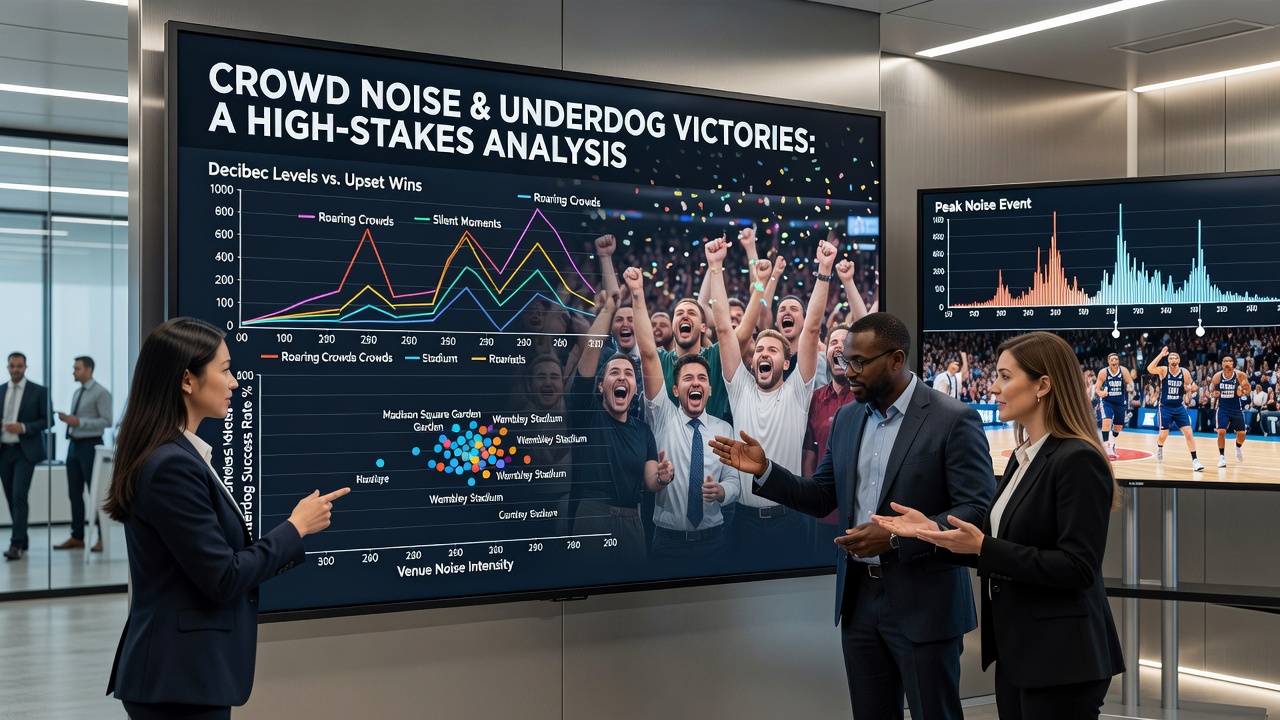
Stadium acoustics have drawn sustained attention from analysts who track how sound pressure influences game dynamics across professional leagues. Researchers measure decibel peaks at various venues and then cross-reference those readings with final scores, particularly in contests where betting markets list one side as a clear favorite. Data sets compiled through the 2025 season show measurable shifts in point differentials when ambient noise climbs above 105 decibels for sustained periods, and those shifts appear most pronounced in playoff environments rather than regular-season fixtures.
Measuring Noise and Defining Underdog Outcomes
Sound engineers place calibrated meters at multiple seating tiers and on the field itself to capture both average and peak levels during critical moments such as third-down stands or late-game free throws. The resulting figures feed into statistical models that categorize games by home-team status and market-implied probability. An underdog victory registers whenever the lower-ranked or lower-seeded team defeats the favorite outright, and analysts further segment those wins by margin to isolate cases where noise may have compressed or expanded final spreads. Studies conducted by university laboratories in North America and Europe indicate that crowd volume correlates with increased variance in officiating decisions, especially on subjective calls such as pass interference or charging fouls.
League-Specific Patterns Through Recent Campaigns
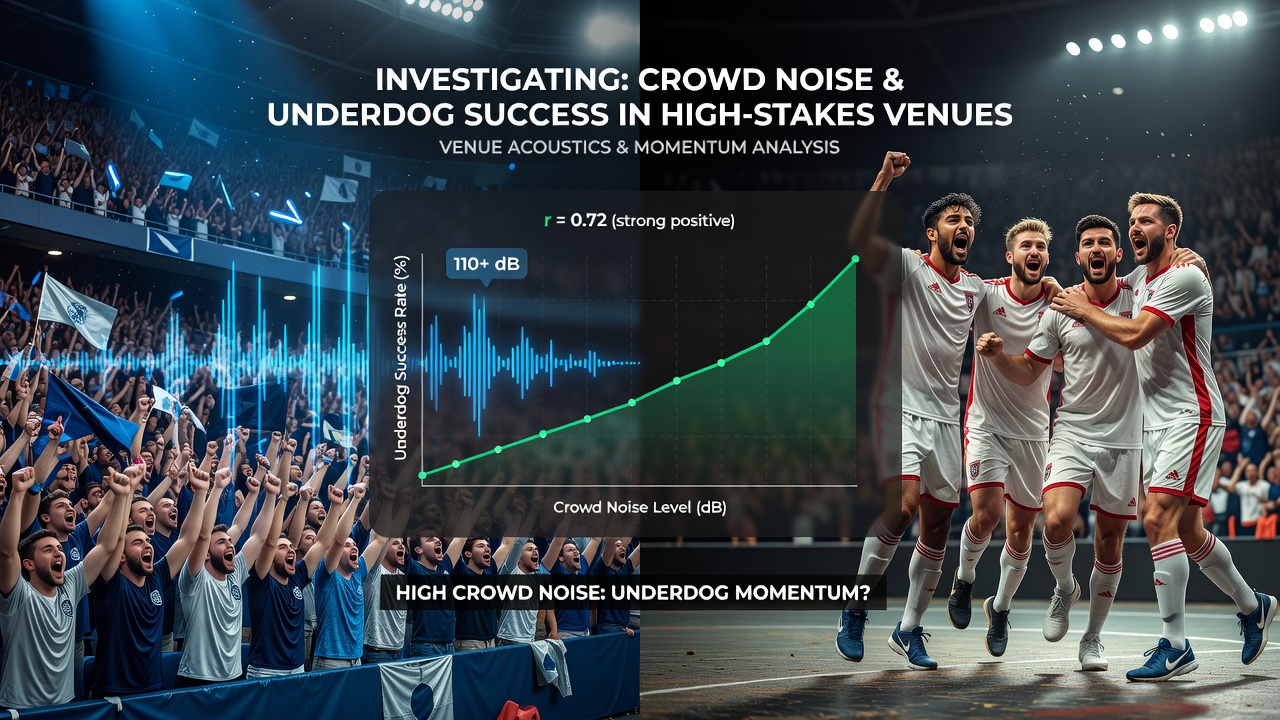
In the National Basketball Association, arenas that routinely exceed 110 decibels during playoff series record underdog win rates approximately four percentage points higher than quieter facilities when the visiting team enters as a double-digit underdog. Similar patterns surface in National Football League data, where domed stadiums with enclosed acoustics produce tighter distributions around the mean score and therefore more frequent covers by lower-seeded clubs. Observers note that these effects intensify during November 2026 when several new indoor venues open with advanced sound-amplification systems designed to reach 115 decibels without distortion. European football leagues present a contrasting profile because open-air grounds experience greater weather-related attenuation, yet matches played in smaller, steeper stands still show elevated underdog success when attendance surpasses 95 percent capacity and sustained chanting occurs.
Referee Behavior and Player Response Under Acoustic Pressure
Officials undergo training to maintain consistency regardless of external sound, yet laboratory simulations and in-game reviews reveal small but consistent biases toward the louder side on borderline judgments. Visiting players report elevated heart-rate variability and slower reaction times on audibly disrupted plays, while home underdogs sometimes capitalize on the same conditions by forcing hurried decisions from favored opponents. One study published in the Journal of Sports Sciences tracked heart-rate monitors across multiple high-stakes fixtures and found that noise spikes above 108 decibels coincided with a 7 percent rise in turnovers by the favored team. Those numbers hold after controlling for fatigue and travel distance, suggesting an independent acoustic component.
Comparative Data Across Continents
Australian rules football provides an additional data point because its grounds feature distinct crowd configurations and variable wind patterns that modulate noise propagation. Records from the Australian Football League indicate that underdogs win roughly 28 percent of games at venues averaging 102 decibels or higher, compared with 23 percent at lower-volume sites, though sample sizes remain modest. In South American football confederation matches, analysts have documented parallel trends during Copa Libertadores knockout ties where packed stands generate continuous drumming and singing that exceed 112 decibels for entire halves. Cross-league regressions that include these regions alongside North American and European samples continue to show a positive association between sustained crowd volume and underdog upset frequency, albeit with diminishing returns once noise surpasses 118 decibels and players adapt through non-verbal cues.
Statistical agencies affiliated with major sports bodies compile these metrics annually, and the most recent reports incorporate refined algorithms that weight noise duration rather than isolated peaks. The resulting indices allow direct comparison between venues and seasons, revealing that newer facilities engineered for acoustics tend to amplify the observed correlation more than older, open designs. Teams preparing scouting reports now routinely request decibel histories alongside traditional film study, and front offices adjust practice regimens to simulate elevated sound environments when upcoming road games involve known high-volume crowds.
Conclusion
Available evidence establishes a statistical relationship between measured crowd noise and the frequency of underdog victories in high-stakes settings, though the magnitude varies by sport, venue architecture, and officiating crew. Continued collection of acoustic and performance data through the 2026 calendar year will permit more granular models that isolate the contribution of sound from other home-advantage factors. Those models in turn support deeper examination of how athletes and officials adapt when venues push sound levels higher than historical norms.